Thyroid ultrasound provides accurate information about the condition of the thyroid gland. The investigation is quick and completely non-invasive.
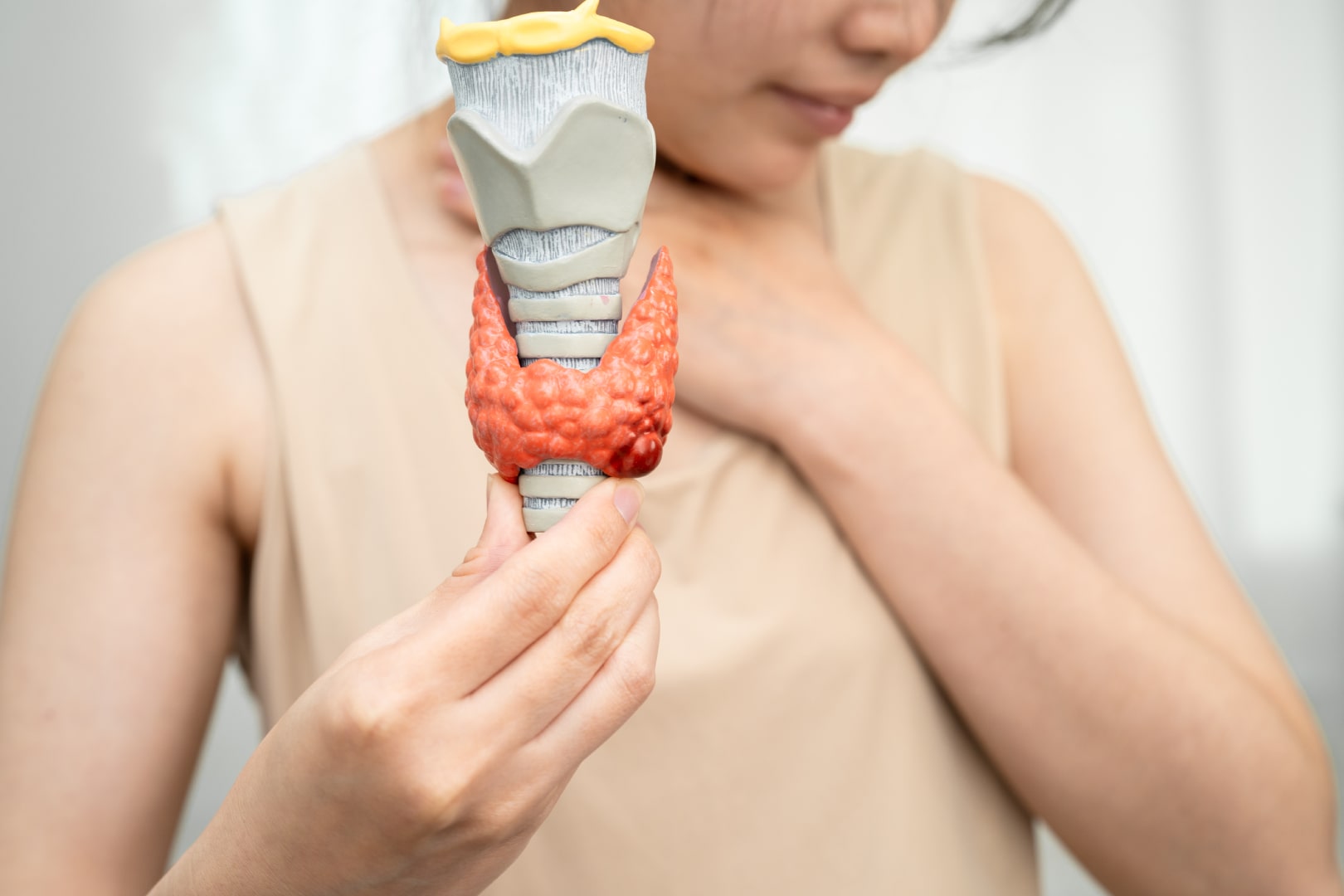
Thyroid ultrasound is a non-invasive, painless imaging investigation that uses ultrasound to assess the structure of the thyroid gland. It can highlight the size of the gland, the appearance of thyroid tissue and the presence of formations such as nodules, being one of the most used methods for local evaluation of the thyroid.
Investigation is recommended when the doctor observes or palpates a nodule, when there is enlargement of the thyroid gland, asymmetries in the neck, or when other tests suggest the need for further imaging evaluation. Ultrasound can also be useful for characterizing already known nodules and for guiding next steps, including when the question of a biopsy is raised.
Assessment of the structure of the thyroid gland
Identification and characterization of thyroid nodules
Assessment of the size and appearance of the gland
Ultrasound monitoring of thyroid changes
Medical guidance for further investigation, when necessary
Thyroid ultrasound has an important role in evaluating nodules because it can describe the shape, size, and some ultrasound features that help assess risk. According to the American Thyroid Association, ultrasound is the most useful imaging test for assessing thyroid nodules, and for cervical nodules it is usually the first imaging investigation used.
It is important to understand that thyroid ultrasound describes the structure of the gland very well, but does not directly show how the thyroid works. Blood tests, such as TSH and other thyroid hormones, are usually necessary for the function, and in some cases other investigations such as scintigraphy or fine needle biopsy may also be recommended.
For a correct assessment, it is important to follow some essential steps:
Let's carry out the investigation when there is a clear medical indication.
Let's interpret the result together with the doctor, not in isolation.
Let's correlate ultrasound with clinical examination and hormonal analyzes.
Let's follow the recommendations on monitoring or further investigations.
Let's re-evaluate thyroid nodules when the doctor deems it necessary.
1.Ultrasound is very useful for identifying thyroid nodules, including small or not easily palpable. In addition, it can highlight features that help estimate the risk and choose the nodules to be tracked or biopsied.
2.Not every thyroid nodule means cancer. The Mayo Clinic shows that most thyroid nodules are not cancerous, and ultrasound is used precisely to better differentiate soothing-looking nodules from those that seem more suspicious. Sometimes small nodules and without alarm signs may only require monitoring.
3.Ultrasound is also commonly used to guide fine needle biopsy. When a nodule has suspicious ultrasound characteristics or meets certain size and risk criteria, the doctor may recommend ultrasound-guided puncture-biopsy to clarify the diagnosis.
4.The investigation should not be done without a clear reason in any person without symptoms or without changes in the clinical examination. Some recent recommendations of the American Thyroid Association draw attention that ultrasounds performed without indication can lead to the discovery of nodules without clinical relevance, and sometimes to unnecessary investigations.
5.If a nodule has already been evaluated and the biopsy has resulted benign, further monitoring depends on the evolution and ultrasound appearance. ATA guidelines mention that repeat biopsy is especially taken into account when the nodule grows or develops suspicious ultrasound characteristics.
We ask ourselves the question of a thyroid ultrasound when there is a palpable nodule, an enlargement of the thyroid volume, changes seen at the consultation, laboratory results that require imaging completion, or when an already known nodule must be traced. In all cases, the result of the ultrasound should be integrated into the general clinical context, together with the analyzes and recommendations of the doctor.
At CMIB, we perform thyroid ultrasound carefully and clearly, for the correct assessment of the structure of the gland and possible thyroid nodules. Schedule a consultation and find out what investigations are recommended in your case.

It is an ultrasound imaging investigation that allows evaluating the structure of the thyroid gland and identifying nodules or other local changes.
No. It is a non-invasive and usually painless investigation. It is performed externally, without needles or incisions, unless separately associated with a procedure such as biopsy.
Fine needle biopsy may be recommended when the nodule has certain suspicious ultrasound features or certain sizes, depending on the medical evaluation. Ultrasound is frequently used to guide this procedure.
It can show the size of the thyroid, the structure of the gland, and the presence of nodules or other changes that require further characterization.