In Vitro Fertilization (IVF) | CMIB — Assisted Reproduction and Fertility Treatment

Rediscover the hope of becoming a parent at CMIB, under the guidance of Conf. The Univ. Drs. Denisa Marina Protopopescu, pioneer of in vitro fertilization in Romania. We offer state-of-the-art technologies (IVF, ICSI, IUI), advanced genetic diagnosis and a holistic approach that integrates hormonal balance, nutrition and emotional support for successful conception.

In Vitro Fertilization (IVF) and Assisted Reproductive Technologies at CMIB

What is in Vitro Fertilization (IVF)?

In vitro fertilization (IVF) - modern solution for infertility

  • What is IVF? In vitro fertilization is one of the most used and effective methods of assisted reproduction, recommended for couples experiencing infertility. The procedure consists of fertilizing the oocytes with sperm in the laboratory, after which the resulting embryos are transferred to the uterus.
  • Who is it addressed to? IVF is indicated in cases of tubal obstruction, endometriosis, severe male infertility, failure of other treatments or infertility of unknown cause.
  • How does the process proceed? The stages of IVF include: controlled ovarian stimulation to obtain more oocytes, puncture harvesting, laboratory fertilization and monitoring of embryo development. Subsequently, one or more quality embryos are transferred to the uterus, and the rest can be cryopreserved.

Initial Assessment and Basic Investigations

Spermogram - the basic investigation in the evaluation of male fertility

  • What is spermogram? Spermogram is the basic analysis by which male fertility is assessed. It describes the quality of semen by analysing the number, mobility and shape of spermatozoa, as well as the characteristics of the seminal fluid (volume, appearance, pH).
  • How are the results interpreted? According to the WHO Handbook 2021 (6th edition), spermogram parameters are standardized and are the main criteria for assessing male fertility. The results are compared with scientifically established reference values and should always be clinically correlated. A single altered analysis does not mean infertility, but indicates the need for further investigation.
  • How is harvesting done? The sample is obtained by masturbation, after 2-5 days of abstinence, in a sterile container. For accuracy, the analysis should be performed within the first 60 minutes after ejaculation. Since the values may vary, it is recommended to repeat the test every 2-4 weeks.
  • Why is it important? The spermogram is the first step towards choosing the most appropriate solutions: lifestyle changes, personalized treatments or assisted reproductive procedures.

Halosperm - advanced test for sperm quality

  • What is Halosperm? Halosperm is a laboratory test that assesses fragmentation of sperm DNA, an important parameter of sperm quality.
  • How is it carried out? The sperm sample is analyzed microscopically after special treatments, and the results show the percentage of sperm with intact versus fragmented DNA.
  • When is it recommended? The test is indicated in case of male infertility, recurrent miscarriages, repeated FIV/ICSI failures or risk factors such as exposure to toxins, smoking or advanced age.
  • What are the benefits? Halosperm provides additional information over the classic spermogram and can guide the choice of the right assisted reproduction technique.

Step 1: Harvesting Genetic Material

Ovarian puncture - an essential step in IVF

  • What is ovarian puncture? It is the procedure by which mature oocytes are harvested from the ovaries after hormonal stimulation, representing a crucial step in the process of in vitro fertilization.
  • How is it carried out? The puncture is performed under ultrasound guidance and light anesthesia, using a fine needle through which oocytes are aspirated. The procedure takes about 15-20 minutes.
  • When is it recommended? It is indicated in IVF treatments, after monitoring the ovarian response to stimulation and when the follicles have reached their optimal size.
  • What are the benefits? Ovarian puncture allows the oocytes needed for fertilization to be harvested in a safe and controlled manner. Recovery is quick, and the patient can return to daily activities after a few hours.

Sperm Freezing (Optional) - Safe Condom Option

  • What is sperm freezing? It is the method of preserving sperm at very low temperatures, for later use in assisted reproduction treatments.
  • How is it carried out? The sperm sample is collected and mixed with a protective solution, then it is quickly frozen and stored in liquid nitrogen.
  • When is it recommended? Before oncological treatments, in the case of surgical interventions with a risk to fertility, in difficult harvesting situations or for men who want to preserve their fertility in the long term.

Step 2: Advanced Embryology Techniques (In The Laboratory)

ICSI - an advanced solution in the treatment of male infertility

  • What is ICSI? ICSI (Intracytoplasmic Sperm Injection) is a modern in vitro fertilization technique used especially when male infertility is severe. The procedure consists of selecting a single viable sperm, which is injected directly into the oocyte using a high-performance microscope and precision microinstruments.
  • How is the procedure carried out? The stages of ICSI are similar to those of conventional IVF: the essential difference is the mode of fertilization - instead of the sperm spontaneously fertilizing the oocyte, the embryologist directly inserts a sperm into it.
  • When is it recommended? ICSI is indicated in case of very low sperm count, poor motility, severe forms of teratozoospermia, obstructive azoospermia or after failure of conventional IVF fertilization.

Activation of oocytes with ionophore calcium

  • What is oocyte activation? Activation of oocytes with calcium ionophore is a method of stimulating oocytes after ICSI, used in situations where fertilization does not occur normally.
  • How is it carried out? After the sperm is injected into the oocyte, it is exposed to a special substance (calcium ionophore), which mimics natural activation signals and promotes the initiation of cell division.
  • When is it recommended? It is applied in cases with absent or very low fertilization in previous cycles of ICSI.

Step 3: Genetic Selection (PGT)

Preimplantation genetic testing (PGT)

  • What is PGT? Preimplantation genetic testing (PGT) is an advanced method by which the genetic material of embryos obtained through in vitro fertilization (IVF) is analyzed, prior to their transfer to the uterus. The goal is to identify healthy embryos.
  • How is it carried out? The procedure involves taking a few cells from the embryo at the blastocyst stage (day 5-6 culture). The cells are genetically analyzed using modern sequencing techniques, without affecting the development potential of the embryo.
  • Types of PGT:
    • PGT-A (Aneuploidy): Assesses the chromosome number of the embryo to select embryos with a higher chance of leading to a viable pregnancy.
    • PGT-M (Monogenic): Indicated when one of the parents is a carrier of a genetic disease determined by a single gene.
    • PGT-SR (Structural Rearrangements): Detects structural chromosomal abnormalities (translocations, inversions).

Final step: Embryotransfer

Embryotransfer - the final step in IVF

  • What is Embryotransfer? It is the procedure by which embryos obtained in the laboratory are transferred to the uterus for the purpose of obtaining a pregnancy.
  • How is it carried out? The transfer is carried out using a fine catheter, inserted through the cervix, under ultrasound guidance. The procedure is painless and does not require anesthesia.
  • When is it recommended? It is the final step in any IVF treatment, after selecting the best embryos, whether fresh or frozen and thawed.
  • What are the benefits? Embryo transfer is the key moment in achieving pregnancy and is carried out in a delicate way that maximizes the chances of implantation.

Doctors

Dr. Denisa Marina Protopopescu

Primary Physician, Doctor of Medical Sciences and Associate Professor, Dr. Denisa Protopopescu has an elite expertise in Assisted Human Reproduction. With international academic and clinical work, including in the UK, she actively contributes to setting European standards in the field as an ESHRE Inspector. His approach integrates cutting-edge research with advanced in vitro fertilization (IVF) techniques for high complexity cases.

Find out more

Dr. Mihaela-Gabriela Mărgăritescu

Primary doctor with a complex medical approach, focused on the integral health of the woman and maternal-fetal medicine. With extensive experience in the management of gynecological pathologies, it combines clinical expertise with state-of-the-art technologies to provide precise solutions in pregnancy monitoring and infertility treatment.

Find out more

Embriolog Miu Corina-Ana-Maria

Senior clinical embryologist with extensive experience in fertility centers in Romania, specializing in advanced IVF, ICSI and cryopreservation procedures. As Director of the Embryology Laboratory at Bucharest International Medical Center, he coordinates the technical activity with emphasis on patient safety and maintaining the highest quality standards in medical practice.

Find out more

Dr. Maria Ramona Neamu

Primary physician with experience in maternal-fetal medicine and laparoscopic surgery, Dr. Ramona Neamțu specializes in the diagnosis and treatment of infertility. It offers advanced solutions through assisted human reproduction techniques, emphasizing a personalized approach and the use of modern technologies for the safety of mother and fetus.

Find out more

Dr. Marilena-Gianina Brașoveanu

Primary obstetrician-gynecology physician with extensive international expertise in infertility treatment and assisted human reproductive techniques (ART). Specializing in prestigious centers in Belgium and Germany, it offers advanced solutions through laparoscopic surgery, hysteroscopy and complex task management. His approach combines scientific rigor with modern technologies to support patients in the process of in vitro fertilization.

Find out more

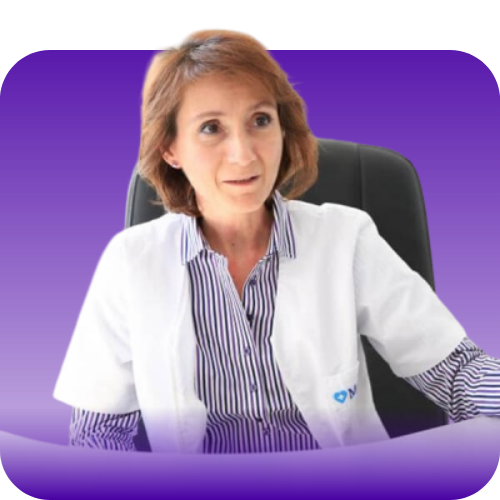
Dr. Corina Bușe

Primary physician with superspecialization in Assisted Human Reproduction and over 20 years of experience in infertility treatment. Specialist with extensive clinical activity, actively participates in international congresses to implement the latest solutions in in vitro fertilization (IVF) and maternal-fetal medicine, offering patients a modern approach based on experience and leading technology.
Find out more

Dr. Claudia-Nicoleta Șai

Primary obstetrician-gynecology doctor with experience in managing complex gynecological pathologies and cases of gyneco-oncology. Specializing in the modern treatment of infertility, it approaches each case with a high degree of professionalism, offering advanced solutions for reproductive health and monitoring of high-risk pregnancies.

Find out more

Dr. Erna Stoian

Primary obstetrician-gynecology physician with extensive experience in reproductive medicine, Dr. Erna Stoian specializes in advanced in vitro fertilization (IVF) techniques. With a solid international training in centers in Spain and the UK, she approaches infertility treatment and uterine reconstructive surgery with professionalism, providing customized solutions for fertility preservation and the health of the female genital apparatus.


Find out more

Together, we write life stories.

For more than 25 years, at CMIB we transform care into results and life stories. Whether you need a consultation, a diagnosis or a personalized medical plan, our team is with you every step of the way.