Urological analyzes assess the health of the kidneys, bladder and prostate. Essential screening for infections, calculi and urinary disorders.
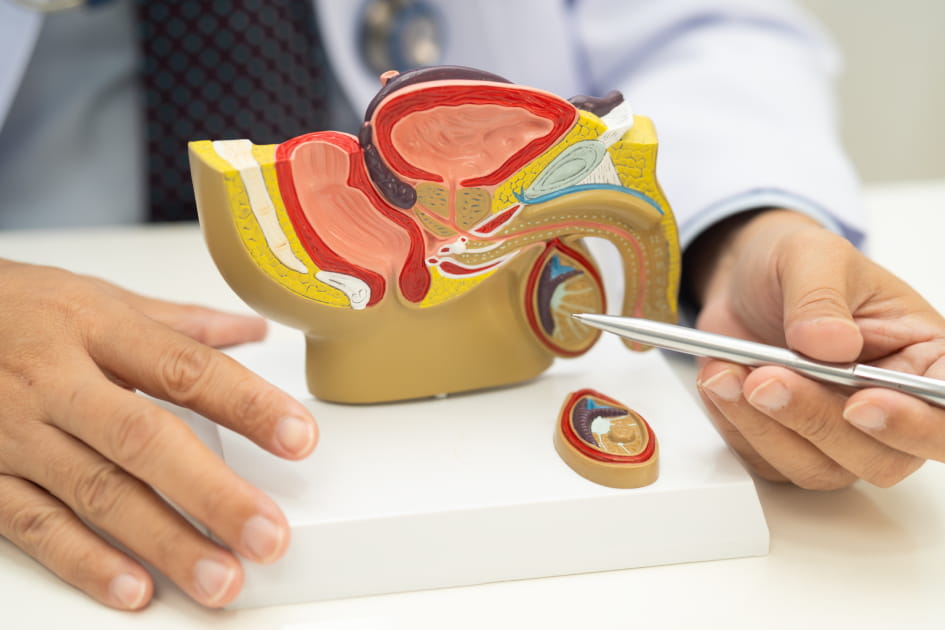
Urological analyzes are intended to provide essential information about the condition of the urinary tract and, depending on the context, about the health of the prostate or other structures evaluated by the urologist. At CMIB, they are recommended according to symptoms, medical history, age and associated risk factors, and their interpretation is always made in a clinical context. Evaluation may include urine tests, blood tests and, when necessary, imaging investigations or further explorations.
It is recommended to perform urological tests when symptoms such as stinging when urinating, frequent urination, difficulty urinating, blood in the urine, feeling of incomplete emptying of the bladder, lumbar or pelvic pain, or recurrent urinary infections occur. Likewise, these investigations are also useful when other routine checks have revealed changes in urine tests or when the doctor wants to clarify a suspicion such as urinary infection, lithiasis, bladder damage or other urological disorders.
Clinical evaluation and interpretation of analyzes in the urological context
Recommendation of appropriate investigations according to symptoms and medical history
Urine tests and blood tests useful in evaluating the urinary apparatus
Correlation of analyzes with ultrasound and other specialized investigations
Personalized monitoring, treatment and prevention plans
Urological diseases can evolve differently from one patient to another, and some may remain for some time without obvious manifestations. Other times, seemingly minor symptoms, such as frequent urination, stinging, cloudy urine, or the presence of blood in the urine, may require further investigation to identify the cause. That is precisely why urological analyzes have an important role in guiding the diagnosis and medical conduct.
Urological health can be influenced by infections, lithiasis, inflammation, obstructions, changes in the prostate, or other urinary tract disorders. In certain situations, the doctor may recommend additional tests such as ultrasound or cystoscopy, especially when there is hematuria, recurrent infections or persistent symptoms without a clear cause.
For a correct assessment, it is important to follow some essential steps:
Let's describe the symptoms and the timing of their occurrence as accurately as possible.
Let's evaluate, together with the specialist doctor, the medical history and associated risk factors.
Let's carry out the recommended analyzes according to the clinical context.
Let's interpret the results together with the doctor, not in isolation.
Let's periodically re-evaluate the situation when symptoms persist or reappear.
1.From the very first stage, it is important to distinguish between mild, transient changes, and those situations that require more thorough investigation. For example, the presence of blood in the urine, either visible or detected only on analysis, must be evaluated, because it can have various causes, ranging from infections and lithiasis to conditions that require further investigation.
2.Urological analyzes are not just a simple urine sample. Depending on the symptomatology, the doctor may recommend urine examination, uroculture, blood tests and, if necessary, imaging or endoscopic investigations. In the evaluation of symptoms such as hematuria, urinalysis, ultrasound and cystoscopy can be used to clarify the cause.
Among the investigations that may be of importance in urological evaluation are:
urine tests,
uroculture,
certain blood tests recommended by the doctor,
ultrasound of the urinary apparatus,
cystoscopy, in selected cases.
3.The results should be interpreted according to symptoms, age, history and any associated conditions. An altered analysis does not automatically mean a serious illness, but may indicate the need for further monitoring, treatment, or investigation. That is why the recommendations are set individually, for each patient.
4.General recommendations for people interested in monitoring urological health include:
conducting analyzes recommended by the doctor,
referral to a consultation when symptoms persist or recur,
monitoring for recurrent urinary infections,
prompt investigation of hematuria,
following the established medical conduct after the interpretation of the results.
Depending on the situation, the doctor may recommend treatment, reevaluation, ultrasound, cystoscopy, or other investigations oriented to the probable cause of the symptoms.
Urological analyzes are useful both for detecting acute problems and for monitoring chronic or recurrent conditions. They can help identify infections, urinary bleeding, lithiasis, or other changes that require supervision and treatment.
5. When do we ask ourselves the question of performing urological analyzes?
When there are persistent urinary symptoms, recurrent infections, blood in the urine, changes seen in routine tests, or when the doctor wants to evaluate suspicions such as lithiasis, inflammation, obstruction or other urinary tract disorders. Investigations can also be useful in monitoring patients with already known urological problems.
At CMIB, we assess urological health through a careful, personalized and oriented approach to correct diagnosis, monitoring and prevention. Make an appointment for a consultation and find out which urological tests are recommended in your case.

Urological analyzes include investigations recommended to evaluate the urinary tract and, depending on the case, other structures analyzed by the urologist. These may include urine tests, blood tests, and additional investigations such as ultrasound or cystoscopy.
They are recommended when symptoms such as stinging when urinating, frequent urination, difficulty urinating, blood in the urine, lumbar pain or recurrent urinary infections occur.
Yes, especially when they recur frequently. In such cases, the doctor may recommend further investigations to identify a favorable cause. Cystoscopy can sometimes also be used in the evaluation of recurrent urinary infections.
Yes. Urine tests are frequently used to identify urinary infections and to guide treatment.