General ultrasonography at the CMIB provides quick and safe investigations for the evaluation of internal organs, glands and blood vessels. With the help of abdominal, pelvic, thyroid and Doppler ultrasound, doctors detect conditions in the early stages and effectively monitor treatments, ensuring complete and personalized care.
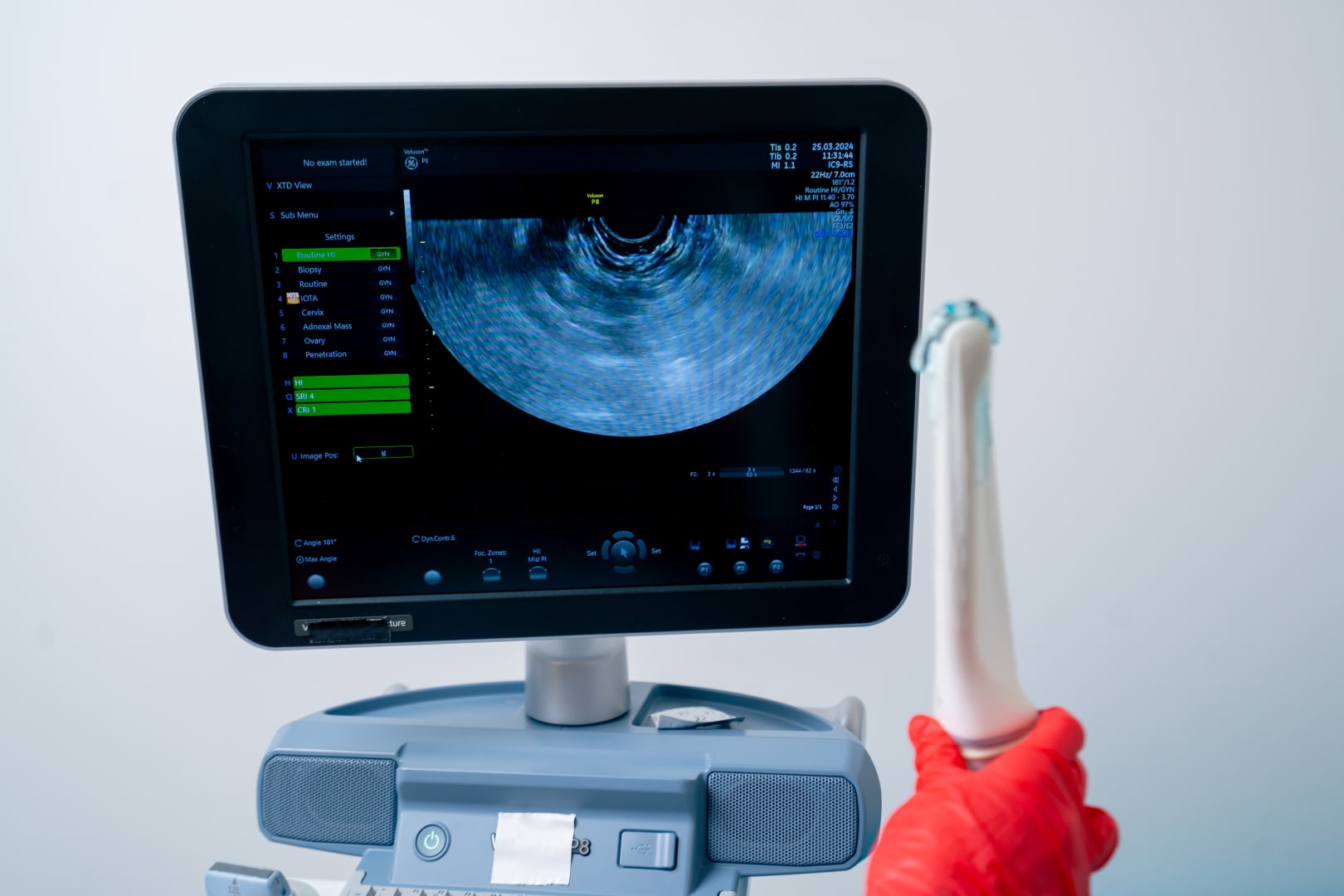
General ultrasonography is a non-invasive imaging investigation that uses ultrasound to produce images of organs and structures inside the body. It can be used to evaluate the abdomen, soft tissues, thyroid, breast, pelvis, blood vessels and other regions, depending on the medical indication. It is one of the most common imaging methods because it is safe, usually painless and does not use radiation.
General ultrasound is recommended when there is pain, swelling, infection, a palpable nodule, changes seen on clinical examination, or when the doctor wants to monitor an already known condition. It can also be used to guide certain procedures, such as biopsies or some infiltrations.
Ultrasound for evaluation of internal organs and soft tissues
Oriented investigations according to anatomical area and symptomatology
Ultrasound monitoring of known conditions
Correlation of the results with the clinical picture and other investigations
Medical guidance for the next steps, when needed
General ultrasonography is widely used because it provides quick and useful information about many regions of the body. RadiologyInfo shows that ultrasound frequently helps diagnose the causes of pain, inflammation and infection, and the NHS notes that it can be used to investigate symptoms such as pain or the presence of a formation, and to monitor certain problems, such as those of the thyroid.
Depending on the area, ultrasound can examine the liver, kidneys, gallbladder, pancreas, spleen, abdominal aorta, soft tissues, thyroid gland, breast, or pelvic organs. For certain indications, there are also specialized ultrasounds, such as Doppler ultrasound, which assesses blood flow through the vessels.
For a correct assessment, it is important to follow some essential steps:
Let's carry out the investigation for a clear medical indication.
Let's choose the right type of ultrasound depending on the area and symptomatology.
Let's interpret the result together with the doctor, not in isolation.
Let's follow the recommendations on monitoring or further investigations.
Let's follow any preparation instructions before the examination.
1.General ultrasound is a first-line method in many clinical situations because it can quickly provide images of organs and soft tissues without radiation exposure. RadiologyInfo and Mayo Clinic emphasize that it is a safe, non-invasive and useful method for guiding diagnosis and treatment in numerous diseases and conditions.
2.Not all ultrasounds are the same. Some are made with the probe to the surface of the skin, and others, in selected cases, use internal probes for more accurate images, for example in pelvic evaluation or other specialized investigations. The choice depends on the region being examined and the medical question to which the answer is sought.
3.Ultrasound can also help guide procedures. RadiologyInfo and Mayo Clinic note that ultrasound is frequently used to guide biopsies or other interventions because they allow real-time visualization of the investigated region.
4.For certain regions, there may be pre-examination preparation. Some NHS guidelines for ultrasound show that an ultrasound frequently takes about 10—20 minutes, and for certain areas, such as the abdomen or pelvis, special preparation instructions may be recommended.
5.The result of the ultrasound should always be correlated with the symptoms and clinical examination. Ultrasound is very useful, but it does not answer all medical questions on its own; sometimes other investigations may also be needed, depending on what is observed and the clinical context. This is a reasonable clinical conclusion, supported by the fact that sources describe ultrasound as a diagnostic and monitoring tool, not as a single universal test.
We ask for a general ultrasound when there is pain, inflammation, nodules, local changes, abdominal or pelvic symptoms, suspicion of damage to an internal organ or need to monitor a known condition. The doctor may also recommend ultrasound to clarify some laboratory results or to guide a procedure.
At CMIB, we perform general ultrasonography with care and clarity, for the correct evaluation of organs, soft tissues and changes that require imaging investigation. Make an appointment for a consultation and find out what type of ultrasound is recommended in your case.

It is an imaging investigation that uses ultrasound to create images of the internal structures of the body. It is safe, non-invasive and does not use ionizing radiation.
It is used to investigate pain, swelling, infections, nodules, and to monitor some diseases of internal organs or soft tissues.
Depending on the indication, ultrasound can examine the abdomen, pelvis, thyroid, breast, blood vessels, soft tissues and other anatomical regions.
Not always. Although it provides very useful information, sometimes the result must be supplemented with other analyzes or investigations, depending on the clinical context.